

 English


5G Base Station Solutions
1. Solution Core Positioning
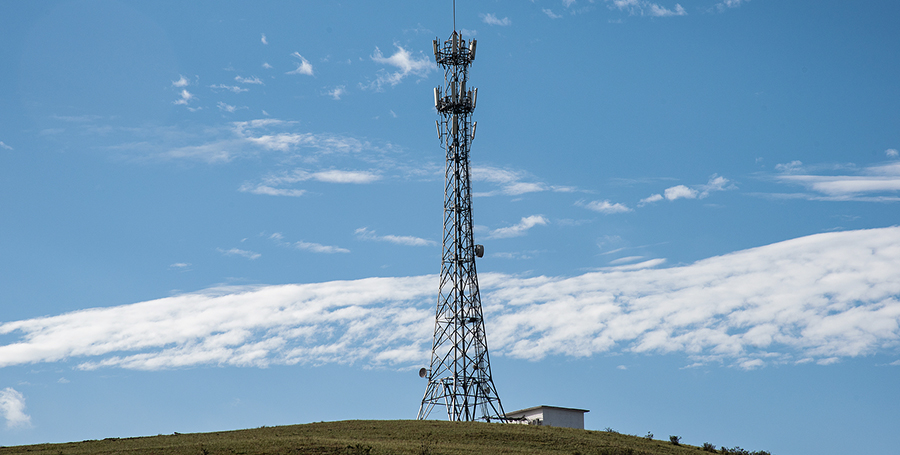
This solution targets the core demands of 5G macro stations, micro stations, and indoor distribution systems, including low signal attenuation, strong anti-interference, weather resistance, fast deployment, and integrated power & transmission. It adopts specialized communication and power cables to adapt to high-frequency and high-density 5G networking, ensuring stable signal coverage and reliable long-term operation.
2. Core Scenarios and Cable Selection
2.1 Backhaul & Trunk Transmission
ADSS all-dielectric self-supporting optical cables are adopted for long-distance aerial backhaul, featuring lightning protection, no metal induction, large spanning capacity, and low installation cost, suitable for outdoor trunk networking of 5G base stations.
2.2 FTTA Front-Haul Scenario
Integrated optical-power hybrid cables are applied for BBU-RRU/AAU interconnection, realizing one-cable integration of optical transmission and power supply. It simplifies tower-top wiring, reduces tower load, and supports plug-and-play rapid deployment.
2.3 Radio Frequency Coverage
Low-loss flexible RF coaxial cables and leaky cables are deployed for 3.5GHz/5.8GHz high-frequency coverage. With low attenuation and high shielding performance, they effectively suppress inter-station interference and adapt to complex scenarios such as urban dense buildings, tunnels, and underground spaces.
2.4 Base Station Power Distribution
Outdoor flame-retardant, UV-resistant, and corrosion-resistant power cables are used for base station AC220V/DC48V power access and equipment power supply. Featuring low heat generation and weather resistance, they adapt to long-term outdoor harsh environment operation.
3. Core Deployment Scheme
3.1 Integrated & Simplified Wiring
Adopt optical-power integrated cabling to replace separate optical and power lines, reduce climbing operations and on-site wiring procedures, and greatly shorten the construction cycle of a single base station.
3.2 High-Frequency Anti-Interference Layout
Adopt layered wiring for radio frequency, optical fiber, and power cables. High-shielding cable structure avoids high-frequency crosstalk and signal attenuation, ensuring consistent 5G network throughput and coverage quality.
3.3 Full Weather Reliable Construction
All outdoor cables adopt low-smoke, zero-halogen, flame-retardant, and weather-resistant sheaths, with UV resistance, waterproof and anti-corrosion properties, adapting to high and low temperature alternation, rain and wind exposure, and other outdoor conditions.
3.4 Standardized O&M & Expansion
Unified wiring standards and cable marking specifications support subsequent network expansion, micro-station addition, and frequency band upgrade, reducing later renovation and maintenance costs.
4. Core Advantages
1. Stable High-Frequency Transmission: Low attenuation and high anti-interference, ensuring 5G high-speed and low-delay signal transmission;
2. Efficient & Low-Cost Construction: Integrated cabling simplifies procedures, reduces labor and tower load, and accelerates network rollout;
3. Strong Environmental Adaptability: Weatherproof, corrosion-resistant, and flame-retardant, suitable for all-scenario outdoor and indoor deployment;
4. Flexible & Iterative: Standardized design supports subsequent network upgrades and capacity expansion with strong scalability.
Related products

Contact
-
 sales@jiahengcable.com
-
 +86-19357267601
-

-
 Heziwu, Shuangyuan Village, Linglong Subdistrict, Lin'an District, Hangzhou City, Zhejiang Province, P.R.China
Products
QR Code
Copyright © Hangzhou Linan Jiaheng Cable Co., Ltd. All Rights Reserved

TO TOP